When seeking professional fire damage restoration los angeles property owners face immediate structural vulnerabilities, synthetic chemical residues, and thousands of gallons of standing firefighting water. Prime Fire Damage Restoration deploys regional dispatch units across the Los Angeles basin to inspect framing, clear toxic particulate, and establish secure containment envelopes.
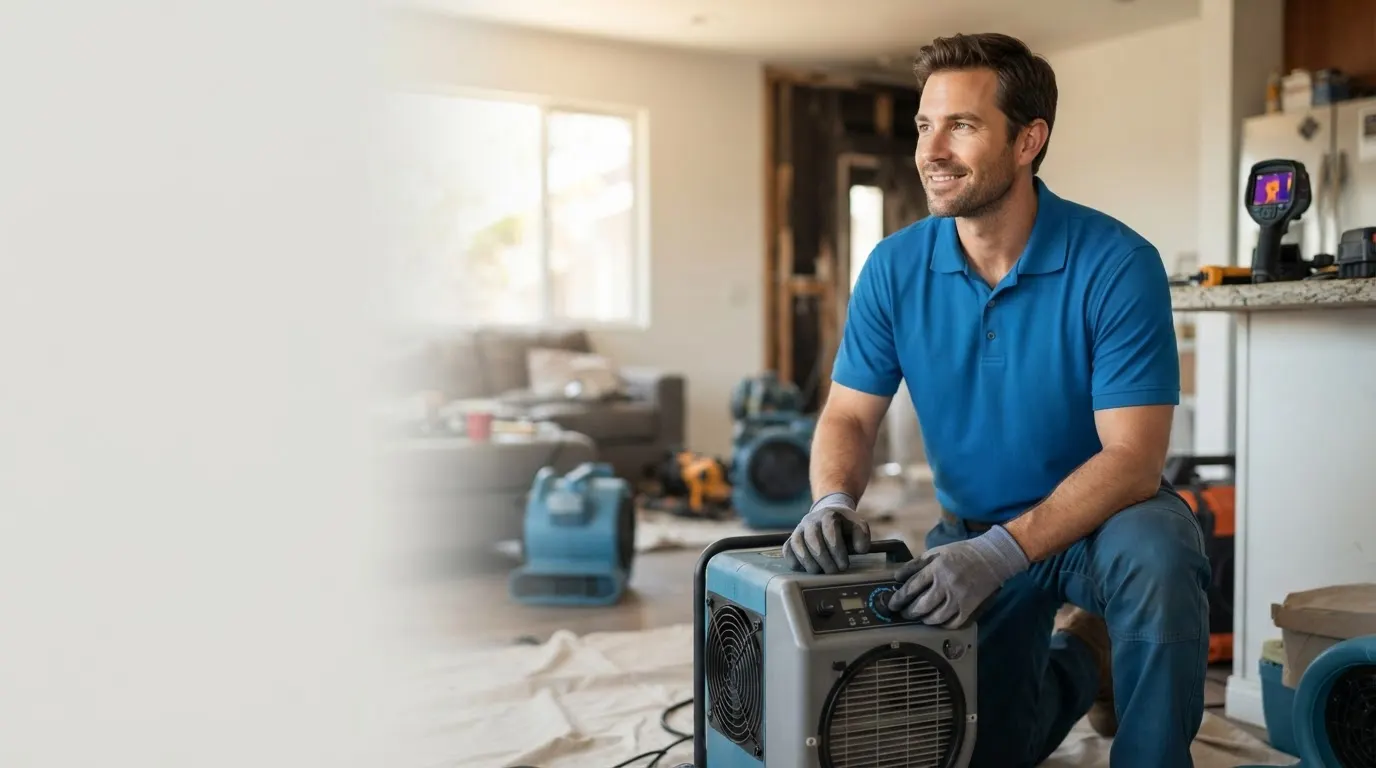
Fire damage restoration in los angeles is a certified structural stabilization, soot decontamination, and moisture remediation service that secures burned properties, neutralizes toxic airborne residues, and extracts firefighting water under IICRC S500 and S540 protocols.
Every service reflects the same meticulous attention to detail, whether it's a single job or a larger fire damage restoration project across los angeles.
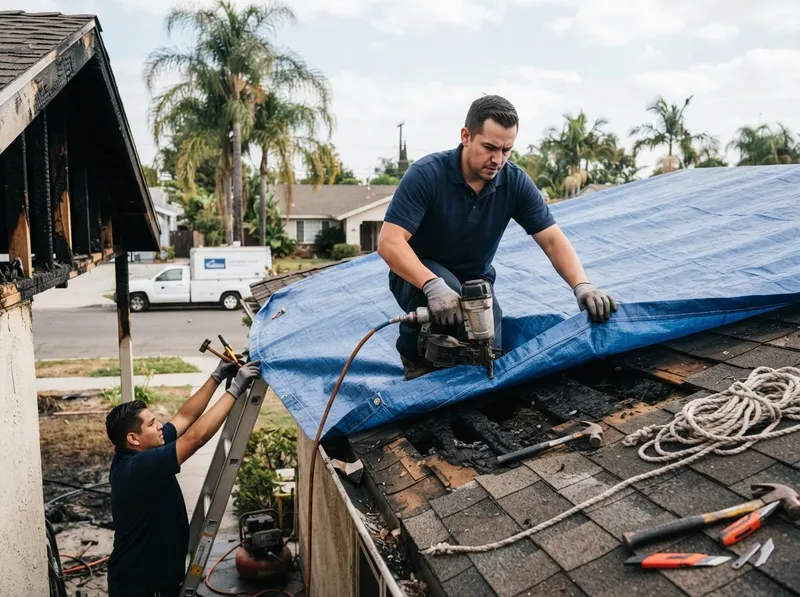
Stabilization crews secure breached building envelopes, damaged windows, fractured exterior doors, and burned roof decks using exterior-grade five-ply CDX plywood and heavy-duty UV-resistant 10-mil polyethylene tarpaulins. All coverings are mechanically fastened using heavy-duty 2x4 framing lumber and structural screws into sound wall studs and roof rafters rather than temporary nails. This secure physical barrier stops wind-driven rain penetration, excludes rodents and wildlife, prevents trespassers, and fulfills legal insurance policy provisions requiring immediate mitigation against secondary structural exposure following city fire marshal scene release.
Get a quote →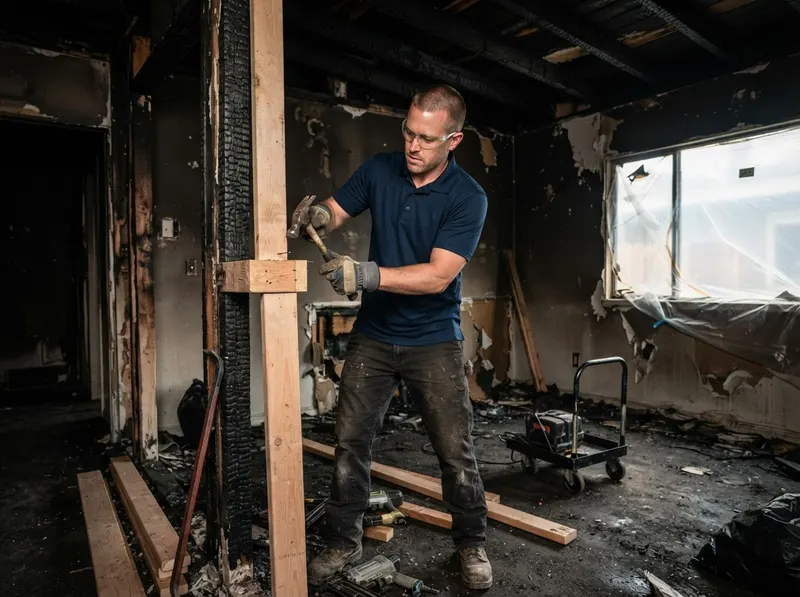
Technicians assess structural load paths, exterior shear walls, floor joist systems, and roof truss integrity against char depth benchmarks and structural deflection limits. Unsound timber framing receives engineered temporary shoring columns and heavy structural posts, while salvageable framing members undergo dry ice blasting, high-pressure baking soda blasting, or HEPA abrasive mechanical sanding to strip oxidized carbon char down to sound, uncompromised wood. Once verified clean, exposed framing is treated with non-porous white or clear antimicrobial encapsulant coatings to permanently lock in microscopic carbon traces and seal residual odors.
Get a quote →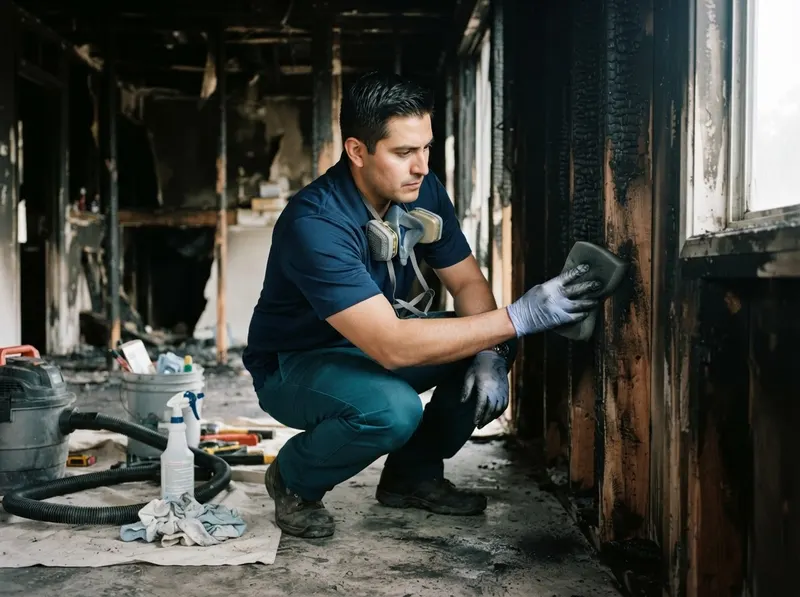
Specialized dry chem-sponges, alkaline degreasing wash solutions, and certified four-stage HEPA-filtered vacuum extraction units remove acidic carbon films, synthetic plastic residues, and protein soot from drywall, finished plaster, crown moldings, cabinetry, and brick masonry. Different types of soot demand custom chemical counter-measures: oily wet soot from synthetic upholstery fires requires solvent-based cleaning agents to dissolve sticky residue, while dry carbon soot from wood fires responds best to dry sponge lifting. Prompt chemical neutralization of acidic residues halts the permanent etching of double-pane window glass, surface pitting of chrome and polished brass hardware, and yellow staining on enameled porcelain and marble surfaces.
Get a quote →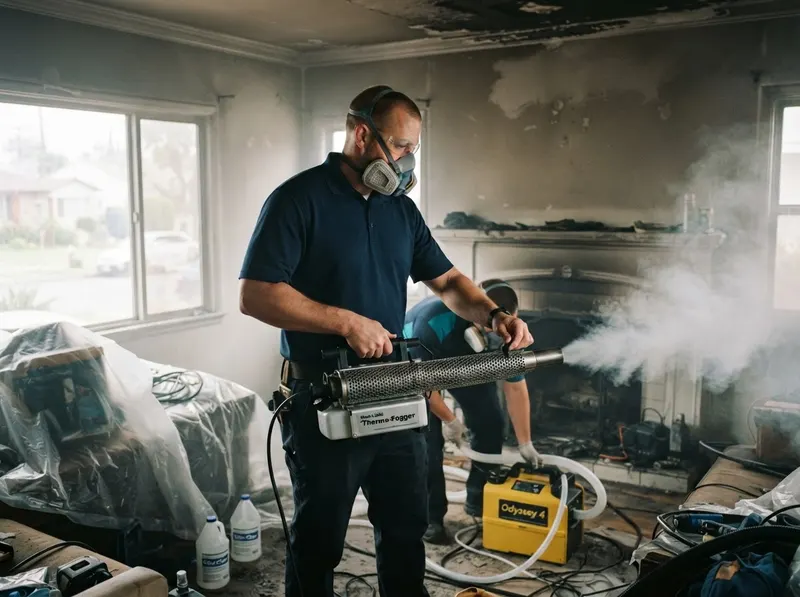
Permanent smoke odor elimination targets vaporized volatile organic compounds (VOCs) that penetrate deep into concrete slabs, interior wood framing, structural subflooring, and insulation batting during high-temperature thermal expansion. Industrial hydroxyl generators continuously neutralize airborne and surface odor compounds using targeted UV light wavelengths that produce atmospheric hydroxyl radicals, allowing safe continuous decontamination inside occupied structures. For deep structural deodorization, industrial thermal foggers heat petroleum-based or water-based counteractants to generate a 0.5-to-2.0 micron aerosol fog that matches the exact physical particle size of fire smoke, penetrating wood pores to permanently destroy odor-causing molecules through chemical neutralization.
Get a quote →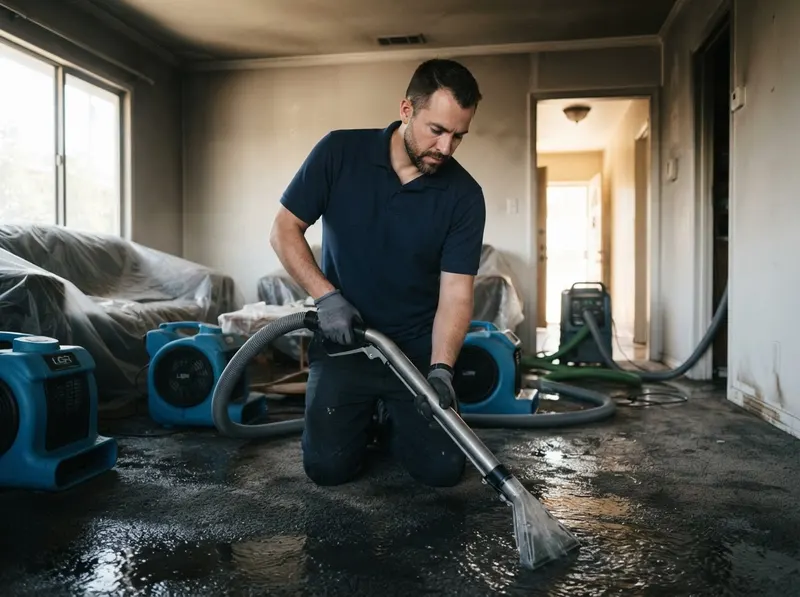
Municipal suppression operations routinely deposit between 1,500 and 5,000 gallons of high-pressure water into residential structures, transforming a localized thermal fire into a widespread Category 2 or Category 3 water loss. Restoration specialists deploy truck-mounted high-flow extraction units, sub-surface weighted floor extraction extractors, and industrial wet-vacuums to remove standing water from hardwood, tile assemblies, and concrete basements. Following bulk extraction, arrays of commercial low-grain refrigerant (LGR) dehumidifiers, desiccant dryers, and high-velocity axial air movers are positioned according to IICRC S500 psychrometric calculations to pull ambient relative humidity below 40% and dry wet structural framing below 15% moisture content.
Get a quote →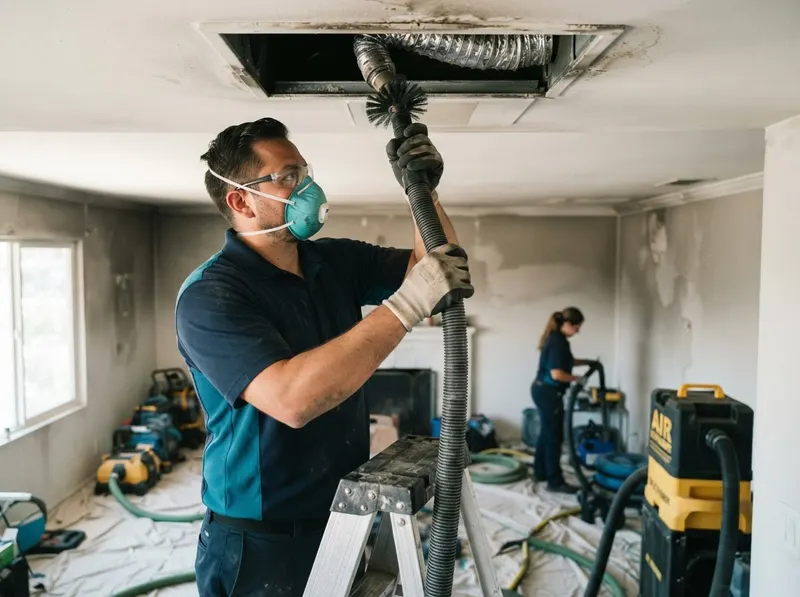
Active HVAC air systems pull smoke, toxic soot, fiberglass particulate, and vaporized synthetic materials directly into return air plenums, distributing toxic contaminants throughout undamaged areas and coating inner duct walls with acidic residues. Technicians isolate mechanical systems and deploy high-torque rotary brush assemblies combined with negative-air vacuum collectors running at 2,500 to 5,000 CFM under continuous HEPA containment. Supply registers, return grills, blower wheel fins, and indoor evaporator coils undergo deep chemical washing and sanitization, accompanied by the strategic deployment of freestanding 2,000 CFM HEPA air scrubbers operating with activated carbon pre-filters to cleanse ambient breathing air across every floor.
Get a quote →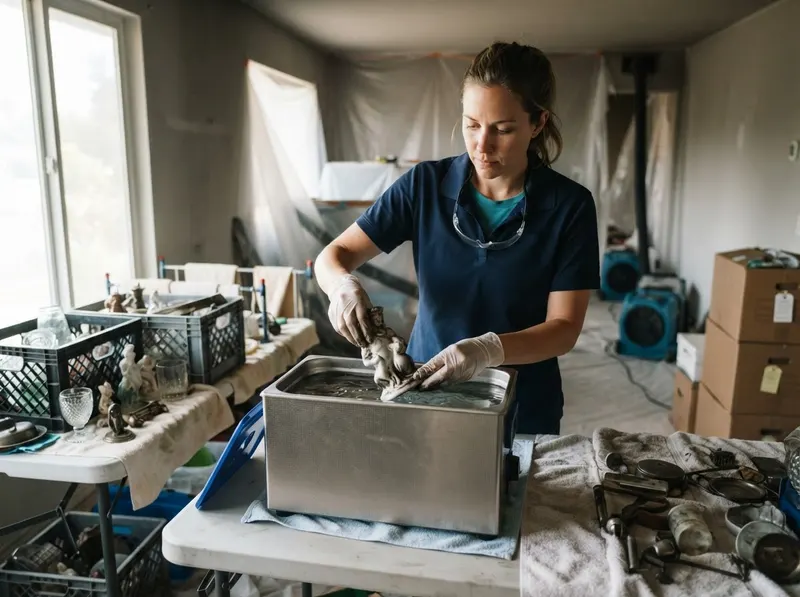
Porous and non-porous personal property, family heirlooms, hard-surface furniture, business electronics, and garments are cataloged piece by piece using mobile digital barcoding systems, high-definition condition photographs, and detailed structural inventory logs. Belongings are boxed in reinforced heavy-duty containers and transported in air-ride vehicles to secure, climate-controlled restoration facilities. Hard-surface goods undergo automated ultrasonic immersion cleaning inside specialized cavitation tanks to strip stubborn soot deposits without abrasive scratching, while textiles undergo pressurized ozone or hydroxyl chamber decontamination before long-term inventory staging pending on-site structural rebuilds.
Get a quote →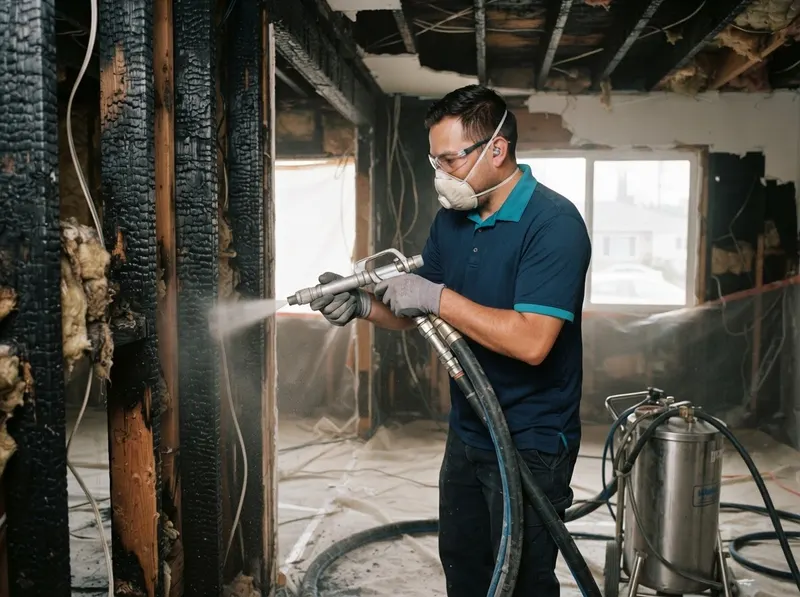
When structural roof rafters, load-bearing studs, and exposed ceiling joists suffer moderate surface burning without losing structural load capacity, abrasive media blasting provides an efficient, chemical-free remediation method. Technicians utilize compressed dry ice blasting (CO2 pellet sublimation) or industrial sodium bicarbonate blasting to strip blackened char layers away from framing members without damaging electrical wiring, copper plumbing, or structural connectors. Dry ice blasting vaporizes completely on impact, leaving behind zero secondary blast media waste and generating only dry carbon particulate that is collected immediately by negative-pressure HEPA vacuum extraction hoods.
Get a quote →You get a firm, itemized quote for your fire damage restoration before any work begins, no surprises, no pressure.
Careful prep, tidy work, and a full cleanup when we are done. We treat your home and belongings like our own.
The same trusted, background-checked team from the first call to the final check.
Property owners facing structural charring and chemical soot contamination require distinct intervention tiers based on fire combustion temperature, the chemical makeup of burned materials, municipal water extinguishing volumes, and structural porosity. If building assemblies suffer primarily from localized, low-heat oxygen starvation fires, such as residential electrical arcing in wall cavities or small kitchen grease ignitions, chemical dry-sponge soot wipe-downs, localized HEPA vacuuming, targeted ultrasonic content washing, and hydroxyl air scrubbing are indicated; this pathway limits physical demolition to immediately charred finish materials, preserves sound structural framing, and costs between $2,800 and $9,500. If the structural loss stems from high-heat, free-burning structural fires or seasonal exterior brush fires carrying ember storms across roof profiles, complete timber framing structural assessments, emergency exterior board-up, structural shoring, and extensive multi-room gypsum board tear-outs are required; comprehensive costs in these complex scenarios typically range from $15,000 to over $85,000 depending on total square footage and square feet of burned timber.
If massive volumes of fire department suppression water saturated subfloors, crawlspaces, and interior partition cavities, commercial centrifugal air movers and low-grain refrigerant (LGR) dehumidifiers must be deployed immediately alongside soot cleaning protocols; prioritizing water extraction within the initial 24 to 48 hours is mandatory to prevent widespread Aspergillus and Penicillium mold germination, but the necessary trade-off is substantial continuous electrical draw, dedicated breaker monitoring, and the temporary evacuation of property occupants while commercial negative air pressure machines, HEPA air scrubbers, and industrial dehumidifiers maintain continuous containment exhaust.
Every project gets a firm, written price after a free on-site visit. Ranges below for orientation.
Tell us about your fire damage restoration job and we'll send a clear, written quote, usually the same day. Or just call and talk to a real los angeles pro.
(909) 271-7174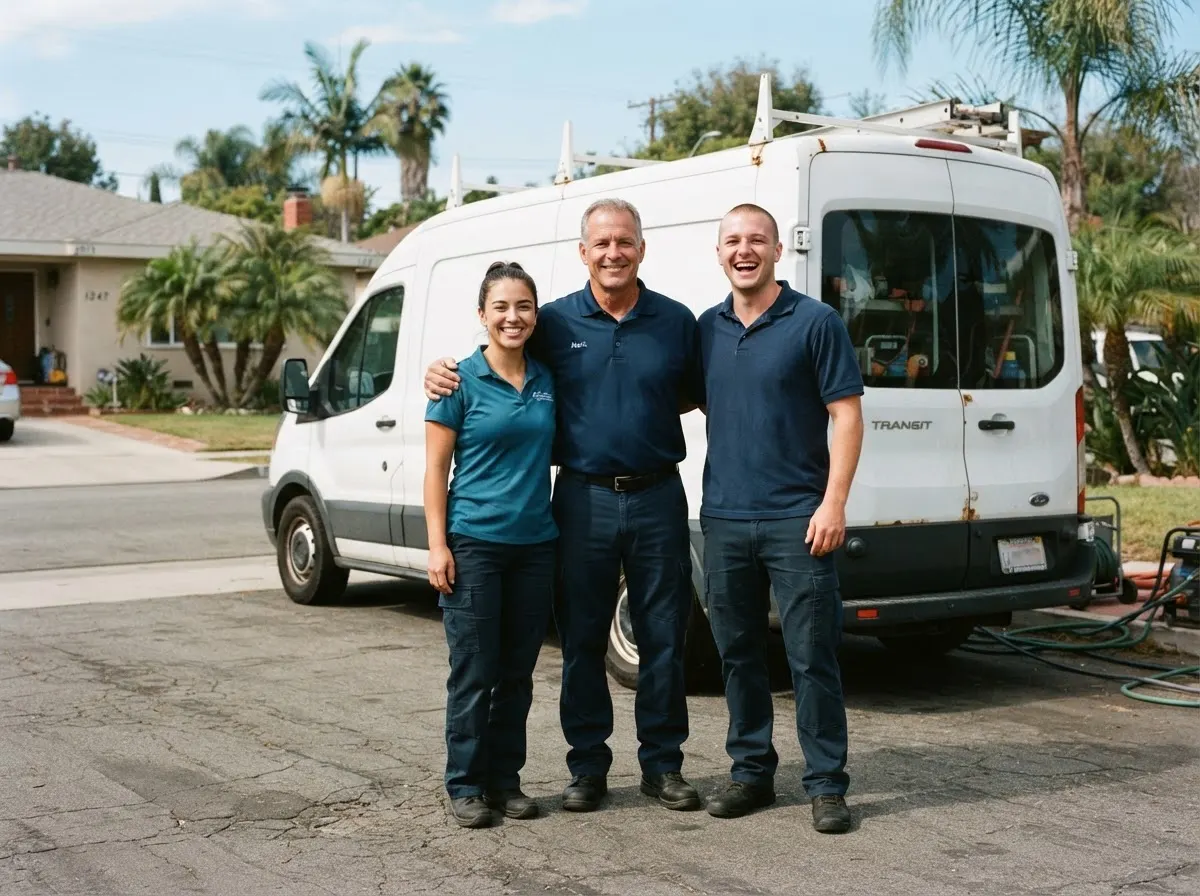
Properties throughout Los Angeles County face distinct structural hazards and restoration complications driven directly by regional architecture, municipal geography, microclimates, and severe seasonal fire cycles. Hillside residences along the Santa Monica Mountains in Pacific Palisades, Brentwood, and Studio City, as well as properties bordering Griffith Park in Los Feliz, are exposed to violent seasonal Santa Ana wind patterns from September through January. These dry, 40-to-60-mph offshore wind blasts generate severe ember showers that breach roof soffit vents, forcing highly alkaline wood ash and synthetic chemical soot deep into horizontal attic assemblies, blowing insulation, and crawlspaces long before flames make direct structural contact. Conversely, in dense interior neighborhoods such as Koreatown, Boyle Heights, and Silver Lake, multi-family apartment complexes and historic early-twentieth-century residential bungalows constructed with unretrofitted lath-and-plaster wall systems, tongue-and-groove subflooring, and balloon framing present severe soot transmission pathways. When fires ignite in these interconnected structures, acidic smoke travels unchecked through unblocked vertical wall cavities and shared party walls, requiring commercial negative-air containment zones, HEPA-filtered air scrubbers, and differential pressure gauges to prevent particulate from migrating into adjacent occupied residential spaces. Further complicating response logistics across the Los Angeles basin is regional traffic density along the I-10, US-101, I-405, and I-5 freeways, which necessitates staging fully outfitted mobile emergency response vehicles and heavy industrial desiccant drying equipment at strategic equipment depots in both the San Fernando Valley and the central metropolitan core to ensure rapid on-site arrival following initial fire department release.
Free estimates for los angeles & the surrounding area.
 Prime Fire Damage Restoration