Structural combustion creates volatile organic compounds and microscopic soot particles that wedge deep into wood pores and gypsum wallboards under extreme heat pressure. In hillside brush fires near Pacific Palisades…
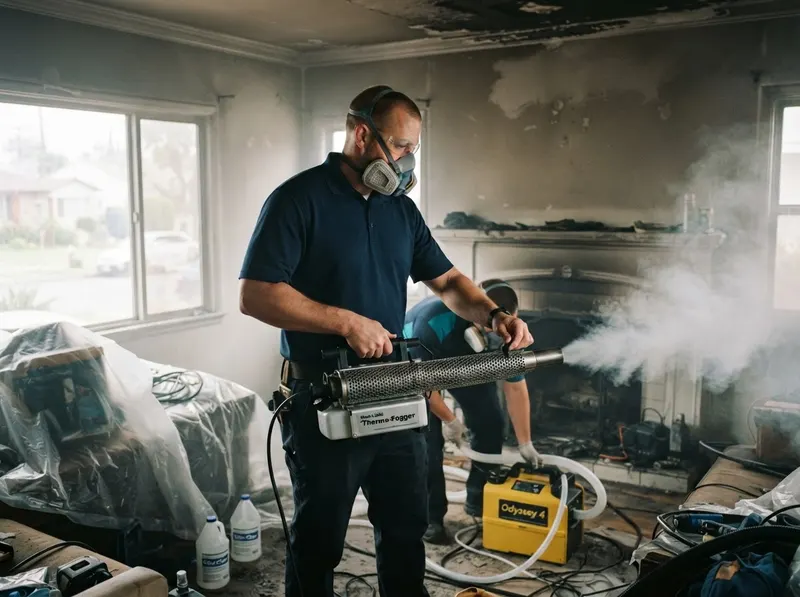
Structural combustion creates volatile organic compounds and microscopic soot particles that wedge deep into wood pores and gypsum wallboards under extreme heat pressure. In hillside brush fires near Pacific Palisades and Studio City or enclosed residential structural fires in Koreatown and Boyle Heights, cooling smoke deposits oily residue across framing cavities. Standard masking sprays or surface wipes fail because porous Douglas fir studs contract as temperatures normalize, trapping burnt proteins and synthetic carbon chains inside. Thermal fogging heats a deodorizing compound into an aerosol mist with droplet sizes between 0.5 and 2 microns, matching the exact penetration pattern of original fire smoke. This chemical counteraction neutralizes odor molecules on a molecular level rather than covering them up.
Hydroxyl generators complement thermal fogging by operating safely in inhabited spaces or alongside occupied containment zones. Hydroxyl radicals (OH-) process ambient moisture through titanium dioxide screens paired with specific ultraviolet wavelengths, generating atmospheric oxidizers that break apart olefinic and aromatic smoke compounds into carbon dioxide and water vapor. In multi-level properties across Brentwood and Silver Lake, hydroxyl machines run continuously for 48 to 96 hours during the physical muck-out phase to neutralize off-gassing soft furnishings, whereas thermal fogging requires a 4 to 8-hour structure evacuation while solvent aerosols settle.
Selecting between immediate thermal fogging and continuous hydroxyl processing depends directly on occupancy status and structural conditions. Hydroxyl treatments accommodate active pack-out labor in Los Angeles homes where residents must remain in unburned wings, generating zero lung-irritating ozone when using genuine hydroxyl optics. Thermal fogging represents the final knockout punch applied only after visible soot is mechanically vacuumed and sealed, functioning best when an entire Encino single-family residence or Northridge commercial bay is cleared of humans and domestic pets. The operational trade-off centers on time versus containment logistics: thermal fogging requires total building evacuation and fire department notification due to synthetic smoke detector triggering, yet completes penetration within hours; hydroxyl treatment safely allows simultaneous framing reconstruction but requires multiple days of continuous electrical operation.
Every job gets a firm, written price after a free on-site visit.
Tell us about your smoke odor thermal fogging and hydroxyl treatment job in los angeles and we'll send a clear, written quote, usually the same day.
 Prime Fire Damage Restoration