Ultrasonic restoration relies on cavitation, generating millions of microscopic vacuum bubbles in an aqueous solution at frequencies between 20 kHz and 40 kHz. When these bubbles collapse against submerged items, the…
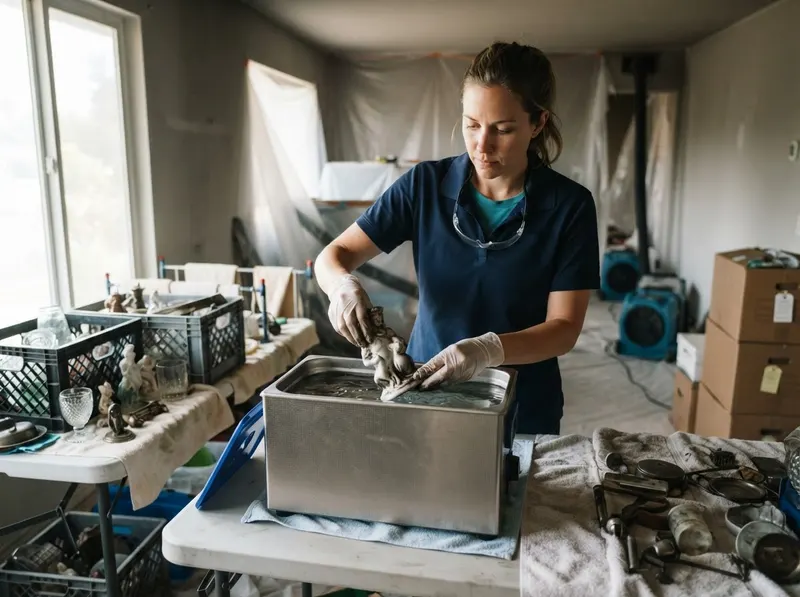
Ultrasonic restoration relies on cavitation, generating millions of microscopic vacuum bubbles in an aqueous solution at frequencies between 20 kHz and 40 kHz. When these bubbles collapse against submerged items, the mechanical energy lifts microscopic soot residues, corrosive chlorides, and oily film from blind holes, threaded surfaces, and intricate crevices that hand-wiping cannot reach. In dense Los Angeles areas like Koreatown apartment complexes or historic Spanish colonials in Los Feliz, unmitigated acidic smoke residue initiates irreversible pitting on metals and etching on ceramics within 72 hours. Removing vulnerable contents from stagnant post-fire environments halts ongoing secondary degradation caused by elevated interior humidity and standing water left behind by fire suppression efforts.
A structured pack-out operates through an organized three-stage pipeline. First, technicians create a room-by-room photographic register, generating barcoded labels for every container to preserve chain-of-custody data required for insurance claims. Second, crews wrap and load items into specialized containment crates, navigating local routes such as the 101, Interstate 5, or Sunset Boulevard toward dedicated processing facilities. Third, contents enter a precision decontamination line involving pre-washing, ultrasonic tank submersion, pure-water rinse chambers, hot-air drying tunnels, and sealed deodorization rooms using hydroxyl generators. If an item exhibits structural charring or delamination, it is cataloged on a Total Loss Non-Salvageable inventory rather than subjected to liquid immersion.
Decision-fit considerations center on surface substrate and economic salvage value. High-touch decorative items, heirloom crystal, mechanical assemblies, and architectural hardware recovered from properties in Encino or Pacific Palisades are prime candidates for ultrasonic recovery because replacement costs exceed processing expenses. Conversely, porous upholstered items or pressboard cabinetry damaged by soot require distinct thermal fogging or dry vacuuming workflows instead of immersion baths. The process demands an off-site operational footprint: homeowners temporarily surrender possession of their contents to secure specialized decontamination facilities, exchanging immediate physical access for certified chemical cleanliness and stable, climate-controlled vault storage.
Every job gets a firm, written price after a free on-site visit.
Tell us about your pack-out and ultrasonic content restoration job in los angeles and we'll send a clear, written quote, usually the same day.
 Prime Fire Damage Restoration