Running a residential HVAC system immediately following a structural fire pulls unburned carbon black, synthetic resin fumes, and microscopic ash through return plenums, distributing contaminants into wall assemblies…
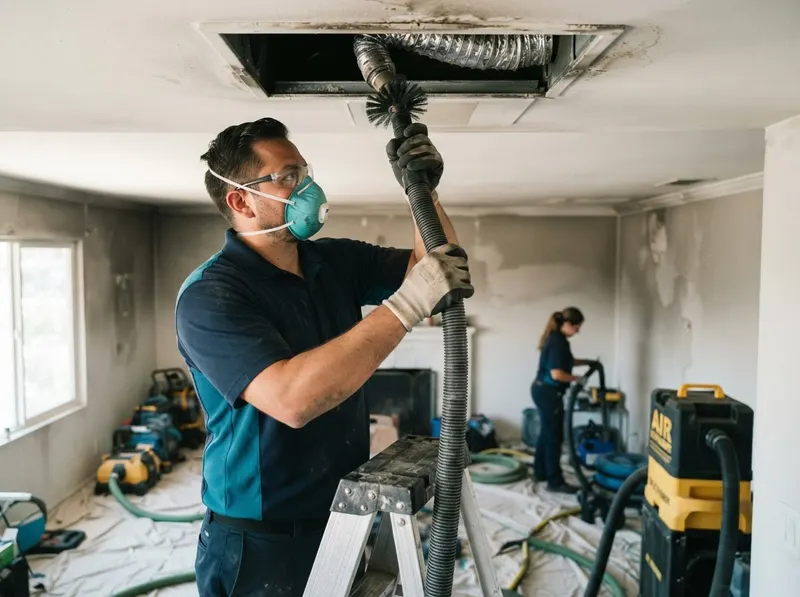
Running a residential HVAC system immediately following a structural fire pulls unburned carbon black, synthetic resin fumes, and microscopic ash through return plenums, distributing contaminants into wall assemblies and attic lines across multiple rooms. In Los Angeles, where split systems and flexible duct runs often route through unconditioned attic spaces in neighborhoods like Encino, Studio City, and Northridge, thermal shifts bake these microscopic deposits into flex-duct lining. If property managers activate a blower before complete containment, clean living spaces absorb volatile organic compounds that settle deeply into porous drywall and structural framing.
Mechanical remediation fits properties where smoke migrated through ducting while the fan was operational or through open return grilles during draft-driven exterior structure fires. For properties featuring sheet metal ductwork, technicians strip inner surfaces using reverse-air agitation whips and continuous negative air machines pulling at least 0.02 inches of water gauge vacuum. If flex-duct installations in Los Angeles homes, such as older properties in Silver Lake or Los Feliz, have experienced internal soot accumulation, removal and replacement of contaminated sections prevents volatile odors from off-gassing during high summer heat. The primary operational trade-off is mechanical restoration versus line replacement: rigid trunk lines can be brushed, vacuumed, and sealed with EPA-registered odor-barrier encapsulants, whereas heavily saturated fiberglass flex runs must be dismantled to prevent long-term particulate recirculation.
Air scrubbing operates simultaneously alongside ductwork extraction to clean ambient interior air volumes. Industrial air scrubbers equipped with certified multi-stage pre-filters, carbon phases, and true HEPA filters (capturing 99.97% of particulates down to 0.3 microns) cycle indoor air volumes continuously to achieve four to six air changes per hour. In coastal and hillside zones including Pacific Palisades and Brentwood, morning marine layers frequently trap lingering smoke plumes near the ground level, requiring negative air staging to prevent secondary penetration through crawlspace venting or soffits. Prime Fire Damage Restoration logs continuous air-pressure diagnostics and particulate sensor readouts to create line-item verification packets directly aligned with insurance carrier claim standards.
Every job gets a firm, written price after a free on-site visit.
Tell us about your hvac ductwork decontamination and air scrubbing job in los angeles and we'll send a clear, written quote, usually the same day.
 Prime Fire Damage Restoration